
Dr Sana Kidwai
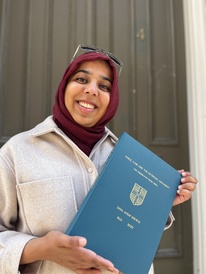
Dr Sana Kidwai
Pakistan
Department of Theoretical and Applied Linguistics, Fitzwilliam College
PhD thesis: Voice, Case and the External Argument: The perspective from Urdu
Universal Grammar proposes that all languages share core grammatical principles, with cross-linguistic variation arising from differences in parametric settings. My PhD investigates the Urdu case system within this framework. Case is used to mark relationships between participants in a sentence. A central aim of the project is to re-examine patterns in Urdu that have often been treated as exceptions to cross-linguistic generalisations, thus posing a challenge for Universal Grammar. I show that many of these apparent exceptions are only superficial, and that Urdu aligns with universal principles of grammar. The dissertation also identifies systematic grammatical differences between Hindi and Urdu, challenging the view that they constitute a single language distinguished only by socio-political factors. More broadly, the dissertation contributes to our understanding of the grammatical and communicative functions of case, the organisation of nominal and verbal structures, and core grammatical concepts, such as subjecthood and agreement.
After the PhD
After completing my PhD, I took a break from academic research to work at Cambridge University Press & Assessment, most recently in academic journals publishing. I used my research skills and deep understanding of academic communities to shape best practice in peer review, addressing challenges such as reviewer fatigue, the use of AI in peer review, and transitioning editorial teams to online systems.
I am currently a Research Fellow on an AHRC-funded project at University College London. I am investigating the theoretical analysis and cognitive processing of different word orders in Hindi/Urdu, particularly orders with material after the verb. My work includes validating a new low-cost experimental method, the online maze task, which, if successful, will enable psycholinguistic research in economically under-resourced areas and unlock access to a wealth of linguistic data.